Mitigation and sentencing evaluations help courts see the person behind the charge, not just the conviction. In Utah criminal cases, these evaluations can organize psychological, developmental, trauma-related, cognitive, substance-use, family, and treatment information into a clear narrative. For Utah criminal defense teams, the value is practical: better preparation, stronger context, and more useful recommendations to inform the court prior to a sentencing decision.
This article is general educational information, not legal advice or a promise about any case outcome.
What Is a Mitigation Evaluation in a Utah Criminal Case?
A mitigation evaluation is a forensic-informed assessment designed to explain relevant life history, including mental health, developmental, cognitive, behavioral, and treatment factors that could make a difference for sentencing. It does not excuse the offense or replace accountability. Instead, it helps counsel and the court understand what shaped the defendant's functioning, what risks need to be managed, and what interventions could be the most beneficial.
In practice with mitigation evaluations, a Utah defense team's request may include clinical interviews, record review, collateral interviews, psychological testing when appropriate, and a written report. The evaluator may examine trauma exposure, mental illness, neurodevelopmental concerns, substance history, adaptive functioning, family instability, education, employment, prior treatment, and protective factors. The best evaluations connect those findings to sentencing issues in plain language, rather than burying the reader in diagnoses.
This work sits at the intersection of psychology and law. The APA's Specialty Guidelines for Forensic Psychology describe forensic practice as the application of psychology's scientific and specialized knowledge to legal questions where the legal purpose matters, because a mitigation report is not therapy, even when it discusses deeply personal clinical history.
The Utah Sentencing Context Matters
Utah sentencing is not just a conversation about punishment. Courts may impose combinations of jail or prison, probation, fines, community service, restitution, and other penalties depending on the conviction and circumstances. Utah Courts explain that judges determine sentences using the Utah Sentence and Release Guidelines, which also set out aggravating and mitigating factors for the court to consider.
The Utah Sentencing Commission's current Adult Sentencing, Release, and Supervision Guidelines took effect May 6, 2026. Because guidelines and statutes change, counsel should verify the version that applies before relying on any sentencing analysis.
That is where a strong evaluation becomes useful. It can give the defense a structured way to present mitigating information that aligns with the sentencing framework instead of offering a disconnected life story. The report should help answer: What is clinically meaningful? What is legally relevant? What can the court do with this information?
How Do Utah Sentencing Guidelines Use Mitigation?
Utah's sentencing process allows mitigating circumstances to inform the court's decision, but mitigation is most persuasive when it is documented, specific, and connected to a realistic sentencing plan. Utah Courts list examples of mitigating factors, including developmental disabilities, showing exceptional cooperation with law enforcement, and being a good candidate for treatment. The point is not to overwhelm the court with every hardship in a person's life; it is to identify the factors that genuinely affect culpability, risk, rehabilitation, or supervision.
Useful mitigation evidence may include:
- Developmental background. Learning problems, intellectual disability concerns, special education records, developmental delays, or adaptive functioning limitations.
- Clinical history. Diagnoses, symptom patterns, hospitalizations, medication history, prior evaluations, and treatment response.
- Trauma and adversity. Abuse, neglect, violence exposure, grief, family disruption, or chronic instability.
- Substance-use history. Onset, progression, treatment attempts, relapse triggers, and co-occurring mental health needs.
- Protective factors. Stable housing, family support, employment skills, motivation for treatment, community ties, and demonstrated cooperation.
- Treatment planning. Recommended level of care, risk-management needs, supervision supports, and barriers the court should understand.
A Mitigation Evaluation Is Not the Same as Other Forensic Assessments
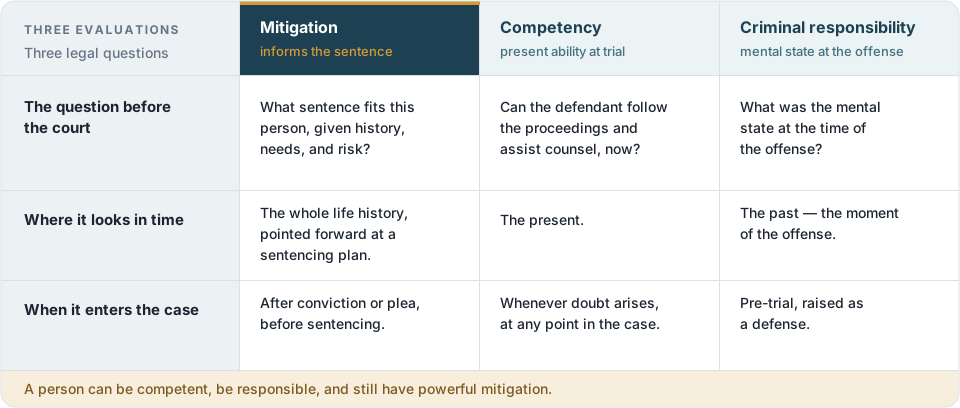
Mitigation evaluations are often confused with competency, criminal responsibility, risk assessments, or treatment evaluations. That misunderstanding can create problems if counsel requests one type of opinion but needs another. Each evaluation answers a different legal question, and the report should stay within its proper scope.
Competency to stand trial focuses on present capacity in reference to how mental health symptoms influence one's ability to participate in their defense. More specifically, Utah statute 77-15-5 requires an individual to have a factual and rational appreciation for the legal system and their charges alongside the ability to consult with Counsel with a reasonable degree of rational understanding. Criminal responsibility considers mental state at the time of the alleged offense. Mitigation is more broad and sentencing-focused: it asks what context, limitations, needs, risks, and strengths should inform the sentence process.
This distinction matters in Utah criminal defense strategy. A person can be competent and still have powerful mitigation. A person can have serious trauma or mental illness without meeting a criminal responsibility standard. A mitigation report should not offer opinions on competency or responsibility unless those questions were specifically retained, properly evaluated, and legally appropriate.
What Should Counsel Gather Before Referring for an Evaluation?
Early referral is one of the easiest ways to improve the quality of the evaluation. If the evaluator is retained only days before sentencing, there may not be time to obtain school records, treatment files, jail medical records, family collateral, or prior psychological testing. In many cases, the most compelling mitigation comes from patterns documented over years, not from a single interview.
Counsel can make the process more effective by assembling a focused packet before the first evaluation meeting:
- A contact order if the defendant is incarcerated.
- Discovery material, criminal history record, and other related legal documentation so the evaluator understands the legal posture and offense context.
- Presentence report materials, if available, including any sections counsel believes are incomplete or inaccurate.
- Mental health and medical records from hospitals, clinics, therapists, medication providers, and crisis services.
- Substance-use treatment records, including assessments, discharge summaries, relapse history, and program participation.
- Educational and developmental records such as IEPs, school testing, disciplinary action, attendance, and graduation information.
- Employment, military, housing, and family records that show stability, impairment, responsibility, or support.
- Collateral contacts who can speak to development, trauma, functioning, treatment motivation, and daily behavior.
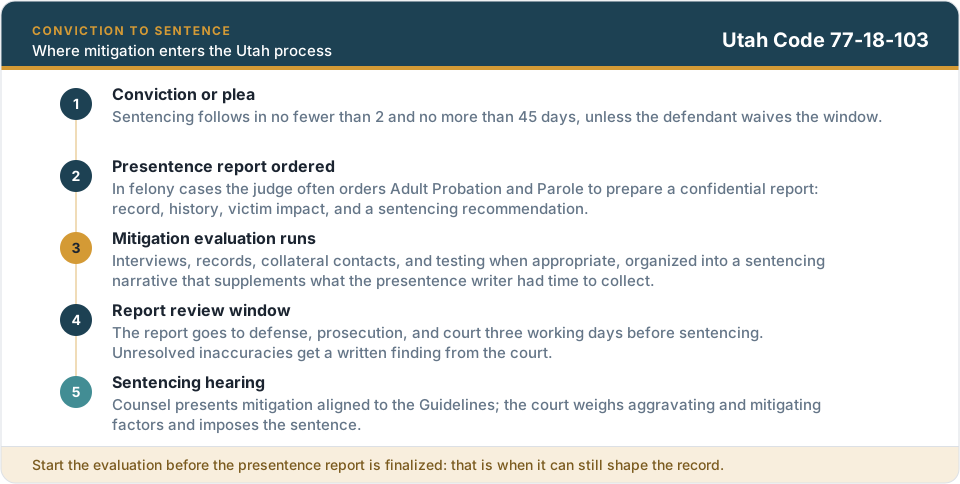
Utah Code Section 77-18-103 allows the court, with the defendant's agreement, to continue sentencing to obtain a presentence investigation report or information from any other source about the defendant. That makes timing important: mitigation should be ready to inform the presentence process and the hearing, not arrive as an afterthought.
The Presentence Report Is a Key Point of Influence
In felony cases, Utah Courts note that the judge often orders the Department of Corrections' Division of Adult Probation and Parole to prepare a presentence report. That confidential report for the judge can include the police report, the defendant's prior record, the defendant's statement, drug and alcohol history, family history, probation history, the crime's impact on the victim, and a sentencing recommendation. A mitigation evaluation can supplement that picture by connecting these clinical factors with a deeper clinical interpretation.
Counsel should also review the presentence report carefully. Under Utah Code § 77-18-103, the report must be provided to the defense, the prosecution, and the court for review within three working days before sentencing. If an alleged inaccuracy cannot be resolved, the statute directs the court to consider it and enter a written finding on the relevance and accuracy of the challenged portion, and it allows additional time for the parties to resolve the dispute.
The goal is not to critique the presentence writer. The better approach is to add reliable information the system may not have had time or access to collect. When a mitigation evaluator can point to records, collateral sources, and clinically grounded reasoning, the defense presentation becomes more useful to the court.
Practical Ways to Make Mitigation More Persuasive
Strong mitigation is organized, honest, and tied to a plan. Courts are more likely to trust an evaluation that acknowledges harmful conduct, addresses risk, and avoids exaggeration. A report that reads like advocacy without clinical discipline can lose credibility quickly.
Helpful practices include:
- Start early. Begin before the presentence report is finalized when possible.
- Define the referral question. Ask for a mitigation evaluation, not a vague "psych eval."
- Disclose limits clearly. The evaluator should explain what records were reviewed and what could not be verified.
- Avoid overclaiming. Trauma, mental illness, or addiction may contextualize behavior, but they do not automatically determine sentencing.
- Connect findings to options. Recommendations should address treatment level, supervision needs, relapse prevention, accountability, and public safety.
- Prepare for testimony. If the evaluator may testify, the report should be written with cross-examination in mind.
Federal cases follow a different framework, but the comparison is useful. In federal sentencing, 18 U.S.C. § 3553(a) directs courts to consider the nature and circumstances of the offense and the history and characteristics of the defendant, along with the purposes of sentencing and other factors. Utah cases are governed by Utah law and guidelines, but the practical lesson is similar: sentencing advocacy works best when personal history is connected to legally relevant decision points.
Final Takeaway
Mitigation evaluations can be powerful tools when they are timely, balanced, and grounded in reliable data. They help courts understand the defendant's history, functioning, treatment needs, risks, and strengths without suggesting that context erases accountability. For Utah criminal defense counsel, the best results come from early referral, careful record gathering, clear scope, and a sentencing plan that gives the court practical options.
When used well, mitigation is not a last-minute plea for sympathy. It is a disciplined way to help the court make a more informed sentencing decision under the applicable Utah framework.
Frequently Asked Questions
Is a mitigation evaluation the same as a competency evaluation?
No. Competency to stand trial is a present-tense question about the defendant's ability to understand the proceedings and assist counsel. Mitigation is sentencing-focused: it asks what history, needs, risks, and strengths could inform the sentence itself.
When should defense counsel request a mitigation evaluation?
As early as possible, and ideally before the presentence report is finalized. Records take time to obtain, and the most compelling mitigation usually comes from patterns documented over years. Utah Code § 77-18-103 provides for the presentence report to be available for review three working days before sentencing, so late referrals leave little room to respond to it.
Sources and further authority
- Criminal Penalties (sentencing, guidelines, and the presentence report)Utah State Courts
- 2026 Sentencing GuidelinesUtah Commission on Criminal and Juvenile Justice, Sentencing Commission
- Utah Code § 77-18-103, Presentence investigation reportUtah State Legislature
- Specialty Guidelines for Forensic PsychologyAmerican Psychological Association
- Competency to stand trialAPA Dictionary of Psychology
- 18 U.S. Code § 3553, Imposition of a sentenceLegal Information Institute, Cornell Law School
Related Services
Written by Dr. Meghan Semenick, Licensed Clinical Psychologist : Forensic & Trauma Psychological Services.
All insights